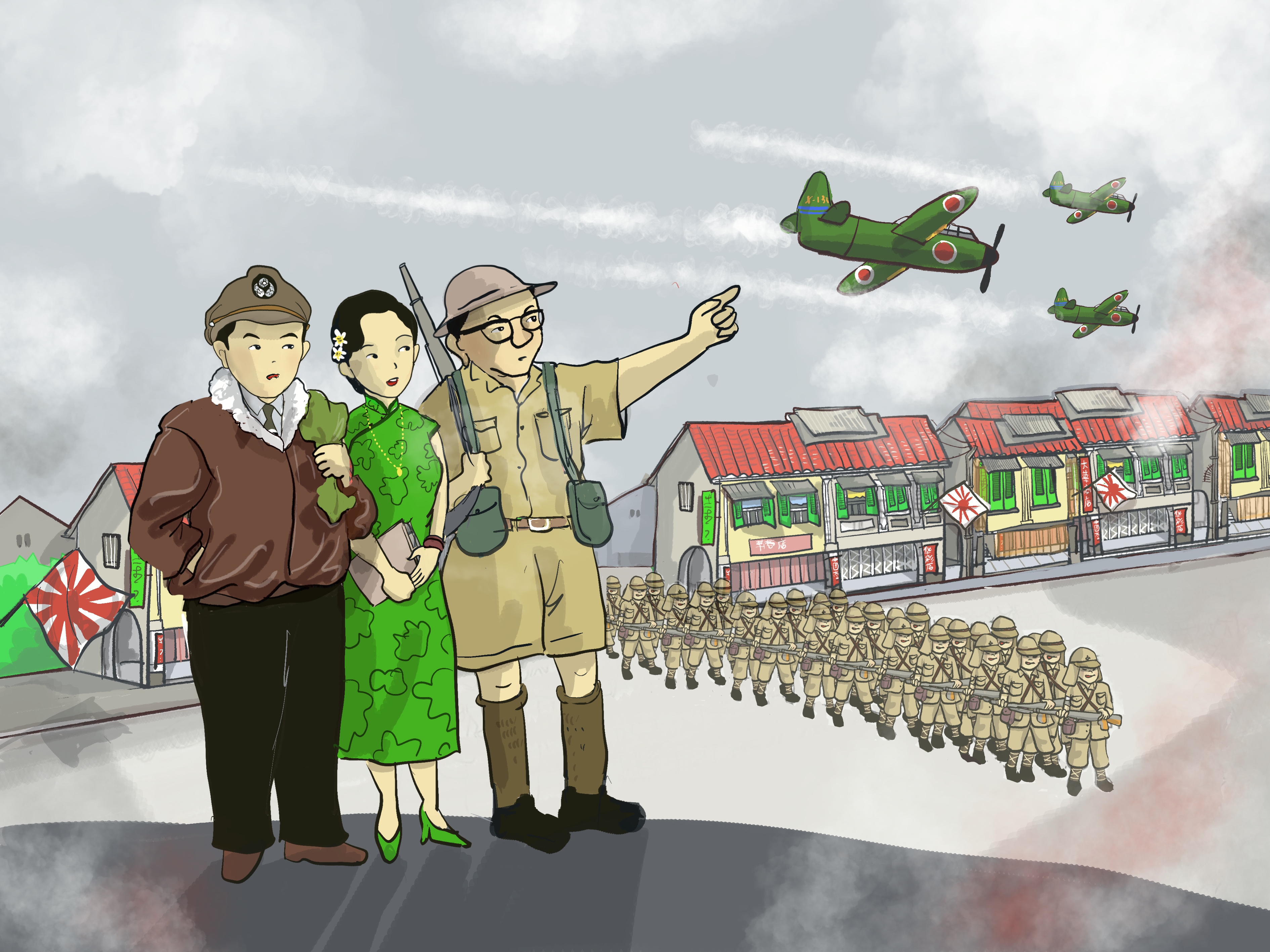
Who were Our Amazing Heroes, the people who sacrificed so much during World War II? Come and celebrate the people who have made a difference to Singapore, through their courage, service, and kindness.
Who were Our Amazing Pioneers, who travelled from distant lands to search for adventure and fortune in Singapore? You will discover our pioneers’ inspiring stories and learn how they made a difference to Singapore through their hard work, service, and sacrifice.
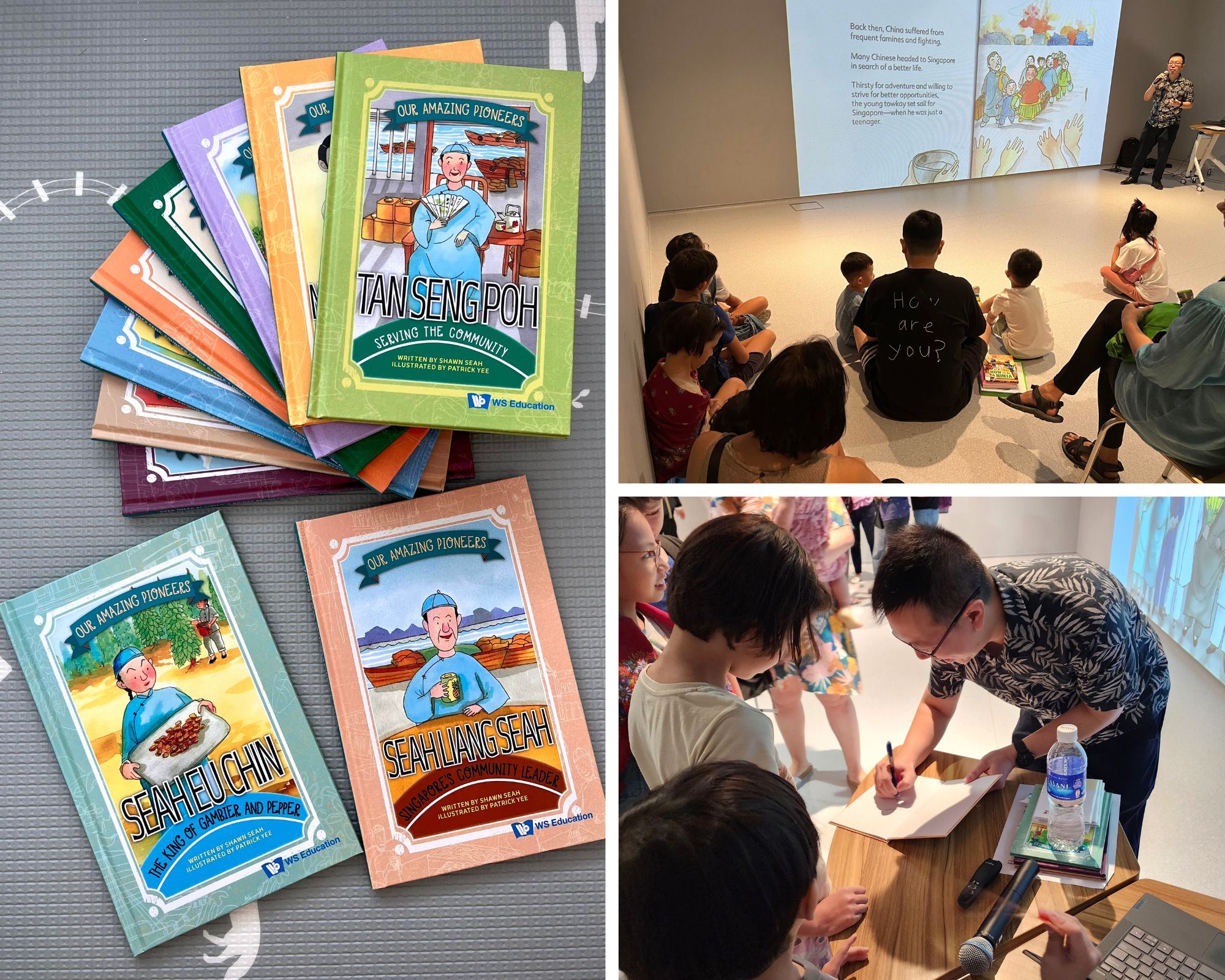
This reading resource page supports students, teachers, parents, and general readers in Understanding Singapore in the Past and Present.
It provides supplementary information on the children’s book series, Our Amazing Pioneers and Our Amazing Heroes, that educates primary school pupils about Singapore’s history through the inspiring stories of those who have come before us.
This page is suitable for National Education (NE), Total Defence (TD), and other relevant Character and Citizenship Education (CCE) programmes.
Author and speaker Shawn Seah wrote these children’s books on Singapore’s pioneers to help pupils remember the enduring values that the pioneers exemplified, like courage, resilience, and service. Through his books on Singapore’s history, he hopes to make history come alive. Shawn is also a regular speaker at assembly talks for primary school children. (For more information, please visit Shawn Seah’s author page and contact page.)
*** ***
OUR AMAZING HEROES
Who was Captain Ho Weng Toh?
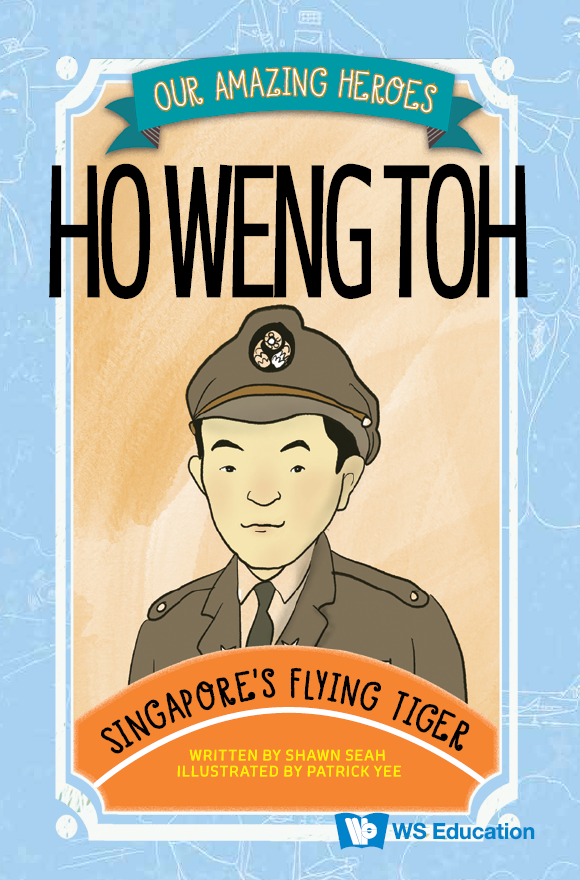
Captain “Winkie” Ho Weng Toh was born in Ipoh, Malaya in 1920. His father, Ho Kok Lim, was originally from the town of Shunde, in Guangdong, China, but left for Malaya in 1902.
One family value that Ho Kok Lim brought with him was the concept of “ngaai”, to endure, to put up with hardships. This was one of many good values that he passed on to his children.
When Ho Weng Toh was a young man, the Imperial Japanese army invaded Hong Kong. He decided to fight the invaders. He signed up to be a trainee pilot with the Republic of China’s Air Force and flew under the Chinese-American Composite Wing, dubbed “The Flying Tigers”, and started his journey to become a pilot. He trained with other brave pilots in Arizona, USA and flew the B-25 Mitchell bomber. Captain Ho flew many dangerous missions!
After the war, he married Augusta Rodrigues in 1949 and became a pilot for Malayan Airways in 1951, which later became Singapore Airlines (SIA). He flew planes for many decades, retiring as Chief Pilot of SIA’s Boeing 737 fleet in 1980.
He passed away in 2024, at the ripe old age of 103.
Who was Ee Peng Liang?

Born in 1913, Ee Peng Liang, also known as Joseph Ee, was a kind man who loved helping others. He was also brave, courageous, and honourable.
Ee Peng Liang joined the Straits Settlements Volunteer Force and led a machine gun section. He survived the Japanese Occupation because of his bravery: he was willing to sacrifice his life for his fellow prisoners of war, and was nearly executed, but was pardoned instead.
In 1947, he set up his own accounting firm, Ee Peng Liang and Company. The company combined with another company and eventually became Ernst and Young. Ee Peng Liang volunteered at a place for boys who needed a safe place to stay. He worked so hard helping people that he even started the Singapore Council of Social Service and the Community Chest, to raise money for those in need. Everyone called him the “Father of Charity”, because he gave his time and care in service of others.
One interesting fact that many people might not know is that some members of the Ee clan (also spelt Yee or Yu) accept that Seah and Yu share a common ancestor.
For more information, please visit this page on the Seah surname.
Who was Mrs Elizabeth Choy?
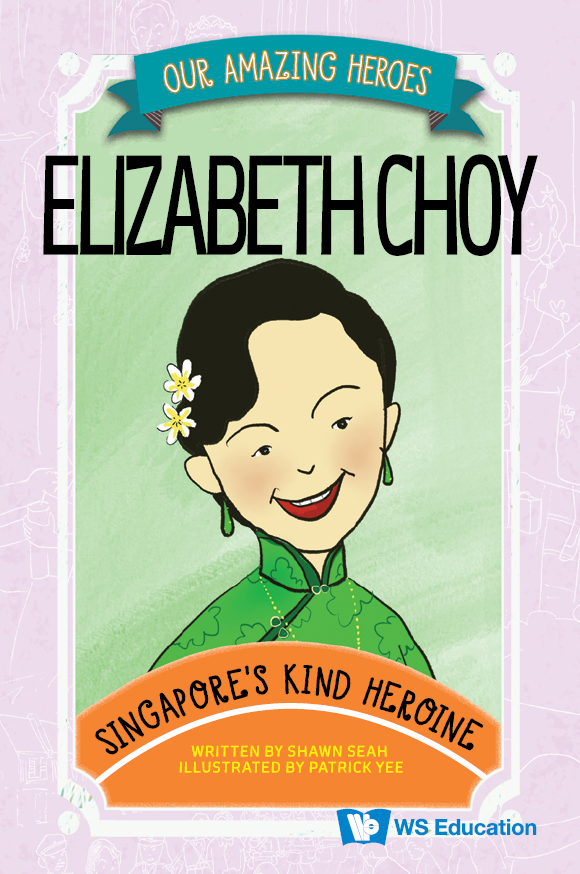
In 1910, Elizabeth Yong Su-Moi was born in Kudat, British North Borneo. Her ancestors were Hakka, who were resilient to hardship.
Elizabeth came to Singapore in December 1929 to study at the Convent of the Holy Infant Jesus. However, she had to sacrifice her education to support her family during the Great Depression.
War soon broke out and reached Singapore’s shores. During the Japanese Occupation, Elizabeth secretly helped British prisoners despite the risks. She was imprisoned and tortured for her selfless acts.
When the Occupation ended, she was invited to England, where she studied. Later returning to Singapore, Elizabeth entered politics. In the 1950s, she joined the Singapore Volunteer Corps and recruited friends and colleagues to defend Singapore. She served as an educator for many years.
Elizabeth’s life story teaches us about the values of bravery, sacrifice, and service.
*** ***
OUR AMAZING PIONEERS
Who was Tan Tock Seng?
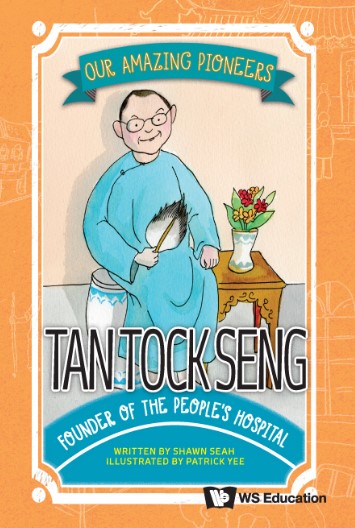
Tan Tock Seng was born in Malacca in 1798. When he was in his early twenties, he sailed to Singapore and arrived shortly after Sir Stamford Raffles established a British trading outpost. Tock Seng was one of the earliest immigrants in Singapore. He sold vegetables, fruits, and poultry. Within eight years, he opened a shop at Boat Quay. He eventually became a wealthy businessman and landowner.
He was often asked to settle disputes between Chinese migrants. This earned him the title of “Captain of the Chinese”. He also became the first Asian to be appointed Justice of the Peace.
He was a founding leader of the Hokkien Huay Kuan. The Huay Kuan helped Chinese migrants to find work and places to stay. He gave money to build Thian Hock Keng, the temple at Telok Ayer Street.
He also donated money to build the Chinese Pauper’s Hospital. Today, this hospital is known as Tan Tock Seng Hospital.
In 1850, Tan Tock Seng passed away from an unknown disease. He was only 52 years old.
Who was Tan Kim Seng?
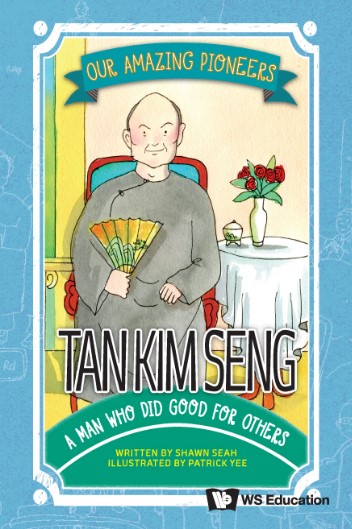
Tan Kim Seng was born in 1806 in Malacca.
He came to Singapore and set up Kim Seng & Company and joined the Singapore Chamber of Commerce. Kim Seng traded in spices and commodities, and never in opium, a damaging drug. He eventually became the richest man in Singapore and Malacca.
Tan Kim Seng gave generously to the community. He started the first Chinese school in Singapore. He built Kim Seng Road, connecting River Valley Road to Havelock Road, for public use. He also built a bridge, Kim Seng Bridge. When Tan Tock Seng passed away, Kim Seng stepped up to lead Tan Tock Seng Hospital. He was also made Justice of the Peace.
In the 1800s, there were many riots in Singapore. During the riots, Kim Seng was called upon by the British authorities to help bring about peace.
Kim Seng donated a large sum of money to the government to bring a more dependable fresh water supply to town. In fact, Chinatown is informally referred to as “Bullock Cart Water” in Chinese because water was brought into town on bullock carts.
However, the waterworks were unfortunately not completed while Kim Seng was still alive. The British marked his generous donation by dedicating a water fountain to his memory.
Who was Naraina Pillai?
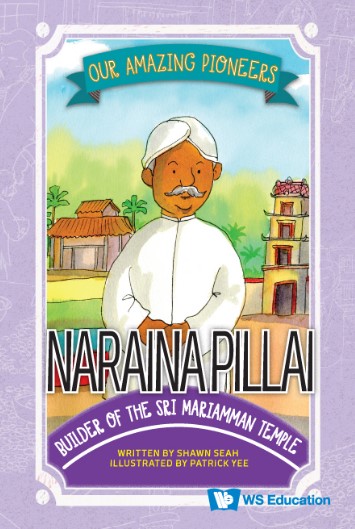
Not much is known about Naraina Pillai, but from what is known, he came to Singapore with Sir Stamford Raffles. Naraina Pillai first worked as a coin inspector, but later went into business. He was a building contractor and cotton merchant.
Although he lost everything in a fire, Naraina Pillai made a comeback through grit, hard work, and the kindness of others. To give back to society, he built what later became Sri Mariamman temple and served the Indian community as a community leader. He is remembered today in the form of Pillai Road.
There was a statue of Naraina Pillai that once stood along the bank of the Singapore River.
What occasion was it that led to the making of Naraina Pillai’s statue? It was the occasion when Singapore marked 200 years since Sir Stamford Raffles landed in Singapore. The statue of Naraina Pillai, as well as other amazing pioneers like Sang Nila Utama and Tan Tock Seng, shows that the Singapore we know today was built by many communities and different people over the years.
Everyone has a part to play in building a better Singapore.
Who was Tan Seng Poh?
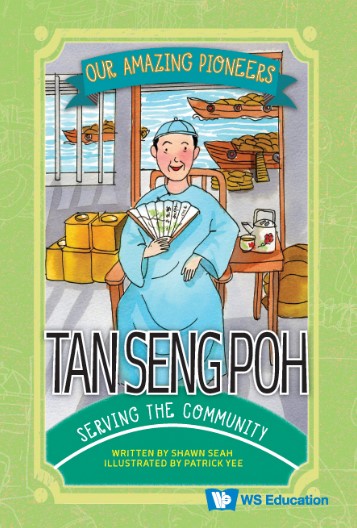
Tan Seng Poh (ca. 1828 – 1879) was an important Teochew merchant and community leader. The son of the Kapitan Cina (leader of the Chinese) of Perak in Malaya, he came to Singapore when he was nine years old to accompany his sister. She married the “King of Gambier and Pepper”, Seah Eu Chin.
Seng Poh stayed and studied in Singapore and worked for his brother-in-law, rising from an assistant to the manager of the firm. While he successfully bought and sold cotton and tea, he also traded harmful vices, such as opium, which were legal under British rule.
(Today, opium and other harmful substances are illegal in Singapore. These undesirable substances hurt families and destroy lives.)
In the later part of his life, Seng Poh gave back to society. He raised money for charitable causes. He worked on improving the city for almost a decade. He maintained peace and order in Singapore.
Seng Poh passed away in 1879 after many years of service.
He is remembered in street names as well as in the name of a park, Seng Poh Garden. Located along Seng Poh Road at Tiong Bahru, Seng Poh Garden is a popular attraction today with a sculpture called Dancing Girl. From certain angles, the girl looks like a swan, ready to take flight and soar.
There is another interesting fact about the street names at Tiong Bahru. There is a street called Eu Chin Street, perpendicular to Seng Poh Road, and close to Seng Poh Garden.
Eu Chin Street is named after Seah Eu Chin. He was none other than Seng Poh’s brother-in-law!
Who was Ngeow Cher Seong?
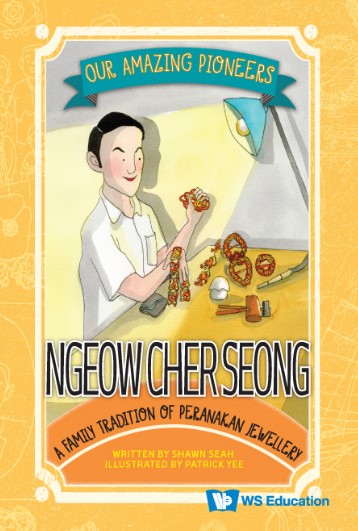
Ngeow Cher Seong (1910–1975) was a Hakka migrant from China who made good in Singapore and settled down to start a family. His silversmithing business was ruined when the Japanese invaded Singapore. Cher Seong was detained by the Japanese, but was released after a few weeks, as they must have determined that he had nothing to do with supporting the war in China.
However, picking himself up after the Occupation, and learning goldsmithing skills from the Indian community, Cher Seong and his family overcame many hardships. Throughout his life, he had a close working relationship with the Indian community.
The Ngeow family started taking more and more jobs from the Indian community, specialising in the Batu Pahat style of Indian jewellery. Batu Pahat Indian jewellery broadly refers to traditional Indian-style jewellery. Cher Seong worked closely with Indians, especially craftsmen, in the operation of his business.
He also took on commissioned work from Peranakan families, to produce customised jewellery. Peranakan jewellery was individually handcrafted by skilled craftsmen and often featured intricate details.
Eventually, Ngeow Cher Seong passed away in 1975.
Who was Syed Omar bin Ali Aljunied?
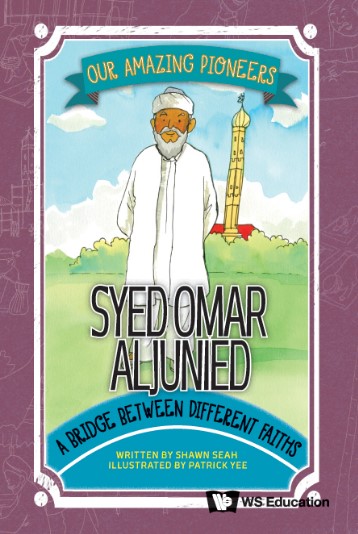
Born in Hadhramaut in Yemen in 1792, Syed Omar travelled to Southeast Asia when he was 24 years old. He first settled in Palembang, Sumatra, before coming to Singapore with his uncle soon after Singapore was founded. He tapped into a regional network of traders stretching from the Red Sea to the Malay Archipelago.
Syed Omar enjoyed the Malay rulers’ trust because he was a direct descendant of the Prophet Mohammad, which brought him the title of Prince of the Malays. The Muslim community also looked up to him as a holy man.
Even as he prospered from trade and property investments, he also gave back to society, bridging between different faiths and cultures. He commissioned the first mosque in Singapore, the Masjid Omar Kampong Melaka in 1820. He also donated land for St Andrew’s Cathedral and the Chinese Pauper Hospital, which eventually became known as Tan Tock Seng Hospital.
Syed Omar passed away in 1852, but his name lives on.
Who was Syed Mohamed Alsagoff?
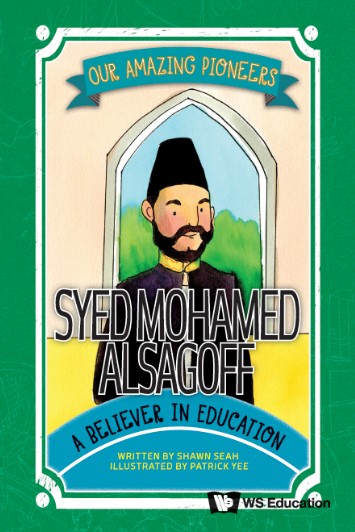
Born in Singapore to a prominent family, Syed Mohamed Alsagoff eventually became a leader of the Muslim community. Because of his mother, Princess Raja Sitti, he was considered of Bugis royal descent. He was a talented merchant, owning and running many companies including Alsagoff and Company, the Singapore Steam Ship Company and the Straits Cycle and Motor Company.
Syed Mohamed contributed to Singapore in many ways, including serving on the Municipal Commission, donating money to charitable causes, and even starting a school in his family home.
After his passing in 1906, the Alsagoff Arab School that bears his family name was started.
Who was Edwin Tessensohn?
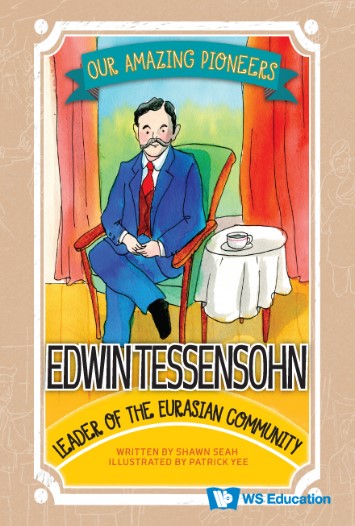
Edwin Tessensohn (1855–1926) arrived in Singapore when he was 15. He worked in the shipping industry, linking East and West, and later opened his own firm.
Tessensohn enjoyed cricket and tennis. He was later elected president of the Singapore Recreation Club, formed by a group of Eurasians in 1883, and served a total of 25 years.
At the time, many Eurasians felt the need for an association to protect their interests and promote their advancement. Tessensohn became patron of the Eurasian Literary Association, which organised lectures, debates and classes. Later, the Eurasian Association was founded and Tessensohn became a committee member and patron.
Tessensohn actively participated with the Singapore Volunteer Corps. During World War I, the Eurasians were keen to support the war effort and Tessensohn, among others, proposed forming a Eurasian Company. Eventually, the Eurasian Company was set up in 1918 with 100 members. Tessensohn was later appointed to the advisory committee.
Tessensohn was also appointed a municipal commissioner and Justice of the Peace. His dedication to public service led to his appointment as the first Eurasian member of the Legislative Council of the Straits Settlements in 1923.
Tessensohn passed away in 1926, but his legacy of leadership and service lives on.
Who was Seah Eu Chin?
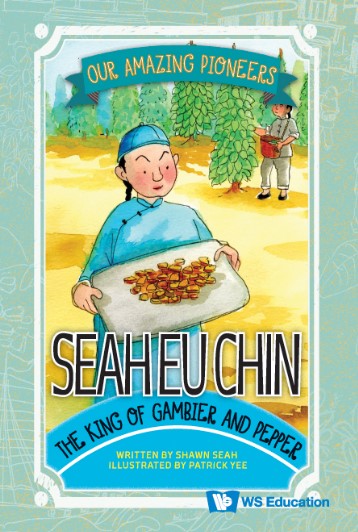
The King of Gambier and Pepper, Seah Eu Chin (1805–1883), was not just a successful merchant.
He led Teochew clan leaders to form the Ngee Ann Kongsi, a welfare organisation that supported the needs of Teochew migrants. He also supported Tan Tock Seng Hospital. When there were riots, he helped bring peace. For contributing to law and order, he was appointed Justice of the Peace, Grand Juror and magistrate.
He passed away in 1883, aged 78, one of Singapore’s oldest inhabitants then.
For more information on Seah Eu Chin, please visit Seah Eu Chin.
Who was Seah Liang Seah?
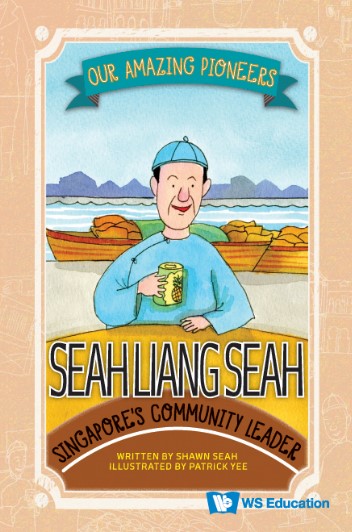
The second son of Teochew leader Seah Eu Chin, Seah Liang Seah (1850–1925) was born in Singapore. When he was a child, Liang Seah studied Chinese with a private tutor under his father’s supervision and learnt English at St. Joseph’s Institution.
At the age of 17, Seah Liang Seah got married, after which he became an assistant in Eu Chin & Co., his father’s company. He worked for many years as his father’s secretary.
In 1883, Seah Liang Seah was appointed a member of the Legislative Council. He was the first Singapore-born Chinese appointed. In August 1900, Seah Liang Seah and other prominent Straits Chinese, Tan Jiak Kim, Dr Lim Boon Keng, and Sir Song Ong Siang among them, founded the Straits Chinese British Association (SCBA). This association has lasted till today, and is now named the Peranakan Association Singapore.
For more information on Seah Liang Seah and his brothers, please visit Seah Eu Chin’s family.
*** ***
Acknowledgements
Special thanks must go to the following amazing people who made all of this possible.
I would like to thank Genealogy Society Singapore (GSS) for the support, especially President Ng Yew Kang, Cyprian Lim, Catherine Khoo, KK Lee, and, above all, the kind and generous Gerardine.
I would like to thank Chua Hong Koon, Ruth Wan, Khoo Yee-Hong, Patrick Yee, Daniele Lee, Rachel, Shi Zhen, and Shiwei. World Scientific made the children’s history book series Our Amazing Pioneers and the sequel series Our Amazing Heroes possible.
I would like to thank Roney Tan, Vivienne Tan, Zahra Aljunied, Julia d’Silva, Jeffrey Seah, Sarafian, and Francis Ngau for giving invaluable input, providing guidance, and sharing their stories. I would like to thank Dr John Kwok for his kind support, guidance, and expertise as well. I have benefitted greatly from all of these amazing people.
I would also like to thank my team of volunteers, namely Claudia, Wilson, Sally, and Jeyasoorya. Their dedication and support helped me to develop inspiring and interesting stories for both adults and children.
Last, but certainly not the least, I would like to thank people in the Singapore heritage community who have helped, supported, and encouraged me.
*** ***
Copyright © 2023-2025 by Shawn Seah
Illustrations by Patrick Yee (courtesy of World Scientific) unless otherwise stated
Webpage updated: 28 February 2026
All rights reserved
 Seah Eu Chin