Seah Eu Chin had four sons and three daughters. Of his four sons, Seah Cheo Seah, Seah Liang Seah, Seah Song Seah, and Seah Peck Seah, two of them – Liang Seah and Peck Seah – eventually became prominent personalities in Singapore’s history.
Of his daughters, little is known about most of them.
*** ***
Seah Cheo Seah (1846 – 1885)
Seah Eu Chin’s eldest son Cheo Seah, whom the British made a Justice of the Peace, was “a gentleman well known for his kindness of heart and liberality”, according to Sir Song Ong Siang.
There is evidence that Seah Cheo Seah donated generously. For example, in the “Annual Report on the Raffles Library and Museum for 1881” by the Acting Secretary, Librarian, and Curator Mr A. Knight, reported in Singapore Daily Times, Seah Cheo Seah was reported (among others) to have donated to the Raffles Museum, “chiefly to the zoological collections”.
Seah Cheo Seah was actively involved in society. He was appointed a Justice of the Peace. He was also a committee member of the Tan Tock Seng Hospital. And according to the Straits Settlements Government Gazette, he was appointed a committee member of the Society for the Protection of Women and Children (the Singapore Poh Leung Kok or Po Leung Kuk).
However, Seah Cheo Seah was involved in society in other, more fun, ways too. For example, he was publicly reported in the newspapers to be a horticulture enthusiast who loved flower shows.
He was also involved in businesses. For example, Seah Cheo Seah, Tan Seng Poh, and Lee Cheng Tee were proprietors of the ‘Alexandra’ gunpowder magazine at Tanah Merah Kechil, in the eastern part of Singapore.
Seah Cheo Seah and his brother, Liang Seah, also worked together with their uncle Tan Seng Poh, who became a manager when Seah Eu Chin retired from business in 1864.
Seah Cheo Seah had a wife named Lee Qwee Poh and a concubine named Lim Kah Lye (who was later buried in the “family burial ground”, likely referring to the family’s burial grounds in the Thomson area).
Around two years after Seah Eu Chin’s passing, Seah Cheo Seah passed away on 25 November 1885, leaving four sons, Seah Eng Kiat, Seah Eng Kun, Seah Eng Yeak, and Seah Eng Lok, and several daughters including Seah Hua Poh (who married Sim Leang Tong).
One of Seah Cheo Seah’s many descendants is Patrick Lee (born 1955). He has a keen interest in family history. From what he knows, Seah Eng Kiat, Cheo Seah’s eldest son, lost his first wife at a young age, but not before she bore him a son, Seah Peng Hong (Patrick’s maternal grandfather).
Seah Eng Kiat later remarried, this time to the daughter of a Malaccan Kapitan Cina.
Reflecting on his Peranakan heritage, Patrick wrote:
As the family demands of a daughter-in-law were very stringent, they could not find a suitable wife from Singapore for Seah Peng Hong. They had to hire matchmakers and finally found my grandmother, a native of the Riau (in what is Indonesia today). She was beautiful and had superb culinary skills. And since her mother-in-law was a native of Malacca, she had to learn and include the famous Peranakan and Malaccan dishes in her repertoire of food and desserts.
*** ***
Seah Liang Seah (1850 – 1925)

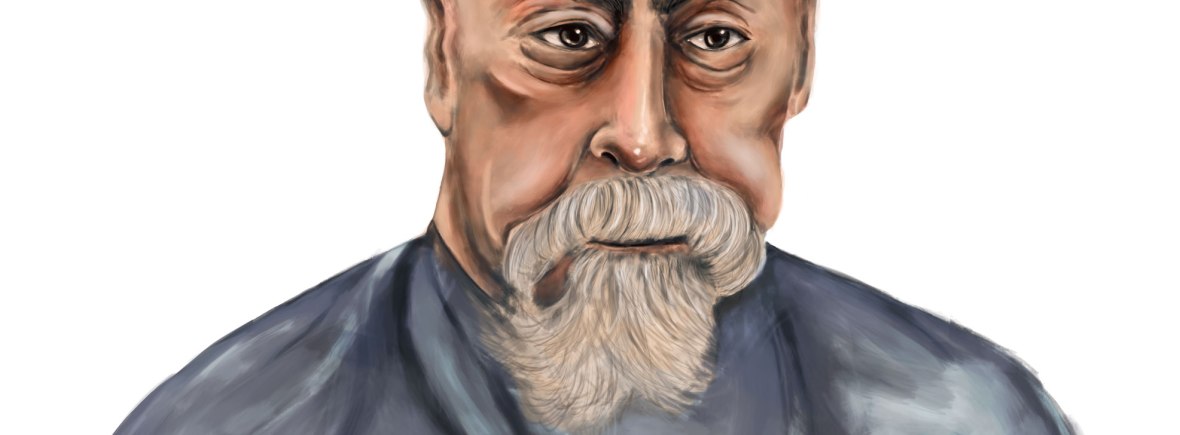
Artist’s impression of Seah Liang Seah. Commissioned and owned by author Shawn Seah.
Seah Eu Chin’s second son, Seah Liang Seah, was another famous pioneer. He was known for his entrepreneurial spirit, wisdom, and kindness. And among Seah Eu Chin’s sons, he was the most famous. (For more detailed information, please visit this page dedicated to leader and legislator: Seah Liang Seah.)
He was born in Singapore in 1850, and studied Chinese with a private tutor under his father’s direct supervision, and learnt English for a short while at St Joseph’s Institution.
He married at the age of 17, and after his marriage became an assistant in Eu Chin & Co., his father’s company, and worked for many years as his secretary.
He was also engaged in many other ventures, including pineapple canning and rubber.
While he was a successful businessman, Seah Liang Seah also took a keen interest in public issues because of his father’s strong influence as an important public figure.
On 5 January 1883, Liang Seah was first appointed by Governor Sir Frederick Weld as a temporary member of the Legislative Council.
His appointment was significant because there had been no Chinese member on the Legislative Council since Whampoa’s death in 1880.
However, Whampoa was born in China (and when he passed away, his remains were shipped back to China), which meant that Liang Seah became the first Singapore-born Chinese to be appointed to the Legislative Council.
In November 1883, his appointment as a permanent member of the Legislative Council received Her Majesty’s sanction.
In 1890, he resigned his seat due to an increase in his private businesses and ill health. For his service on the Legislative Council, he received the thanks of the Secretary of State in 1891, communicated to him through the Governor, Sir Cecil Smith.
In 1894, on the resignation of Tan Jiak Kim, Seah Liang Seah was once again appointed to the Legislative Council, but resigned in 1895 together with the other Singapore unofficial members of the Legislative Council, to “protest against the unsympathetic attitude of the Home Government over the Military contribution”.
However, because of his experience, he continued to be occasionally appointed as a temporary member of the Council to stand in for members who were absent or on leave.
Around this period, Seah Liang Seah was also a member of the Municipal Commission, which oversaw public works in Singapore. He served with distinction until he was succeeded by Choa Giang Thye in 1897.
In 1896, Seah Liang Seah and Lee Cheng Yan rallied over a hundred Chinese merchants to discuss repercussions of provisions in the Amendment Bill to the Bankruptcy Ordinance. They contemplated forming an association to protect their interests, according to Selected Treasures From the Collection of the SCCCI Chinese Business Culture Hub.
The Straits Budget (4 Feb 1896) reported that Seah Liang Seah presided over a meeting of the leading Chinese merchants at his house for the purpose of forming a Chinese Chamber of Commerce. A provisional committee was even appointed.
However, this idea only took off a decade later. In 1906, the Singapore Chinese Chamber of Commerce was formed (the Singapore Chinese Chamber of Commerce & Industry today).
In terms of family life, Seah Liang Seah had many children: his sons were Seah Eng Teck, Eng Keong, Eng Tong, Eng Choe, Eng Thye, and Eng Khway, and his daughters were Seah Wah Cheng, Wah Kee, Wah Sim, Wah June, Wah Yong, and Wah Jim.
Significantly, Eng Teck was a wealthy landowner; Eng Keong owned the Sembawang Hot Spring; and Eng Choe was a civil engineer. And Eng Khway was a surgeon who eventually settled down in England.
Seah Liang Seah passed away in 1925. Today, his life and contributions to society are still remembered in the name of Liang Seah Street.
*** ***
Seah Song Seah (1857 – c. 1910)

Painting of Seah Song Seah. Courtesy of Kenneth Seah.
Seah Song Seah, like the rest of his family, was a wealthy and successful businessman.
For example, he grew gambier, pepper, and rubber on his plantation in Muar, Johor.
He was also chief partner of opium and spirit farms, like his uncle Tan Seng Poh. In the late 19th century, Seah Song Seah was the revenue farmer in Singapore, Malacca, and Johor, along with his other business partners.
For example, to gain a sense of how vast his landholdings were, one could look at an advertisement in the Straits Times on 13 April 1912. The administrators of Seah Song Seah’s estate put a site called Bukit Kepong Estate up for auction. The estate was over 10,000 acres of land in the district of Muar in the Malay Peninsula, or over 40 million square metres. And that was not the only piece of land he owned, as he owned land in Singapore as well.
The collage below shows Seah Song Seah’s tableware, with his triple “S”.
(Collage constructed from photographs taken of Seah Song Seah’s great-grandson Kenneth Seah’s collection. Courtesy of Kenneth Seah.)

Actual items owned by Seah Song Seah. Courtesy of Kenneth Seah.
Seah Song Seah was likely as generous and philanthropic as his father and brothers. For example, in 1906, he and other members of the Straits Chinese community donated to the Japanese famine relief fund.
He was also actively involved in Singapore society. For example, he was an honorary member of the Singapore Volunteer Infantry (SVI).
For context, the Singapore Volunteer Rifle Corps (SVRC) was raised in 1854 to maintain Singapore’s internal security, following the massive Chinese riots. Significantly, Seah Eu Chin, Song Seah’s father, was one of the mediators during the 1854 riots. In 1888, the SVRC became the Singapore Volunteer Artillery (SVA), and its success prompted the formation of other volunteer corps. In 1901, the SVA and other volunteer corps were consolidated into the Singapore Volunteer Corps (SVC). The SVC had engineering and infantry units, including Chinese companies, and, in 1910, a Malay company.
Like his brother Cheo Seah, Song Seah was well known for his interest in flower shows. According to the Straits Times Weekly Issue (18 April 1887), he was one of the “well-known exhibitors in past years”, alongside prominent people like Syed Omar Aljunied and Whampoa. In the Singapore annual Flower Show of 1887, Seah Song Seah reportedly won first prize for flowers like caladiums; balsams; verbenas; and even gaillardias.
One little known fact is that 253 River Valley Road, the main building of the premises of the Nanyang Sacred Union dedicated to Confucius, was Seah Song Seah’s former mansion. It was completed in 1896.
Another little known fact is that Seah Song Seah was asked by Chinese ratepayers to stand for election as Municipal Commissioner around 1892. However, he declined their request to stand for election.
A final piece of trivia: according to the Tiong Bahru Seah Eu Chin heritage signboard, Purvis Street was originally named Song Seah Road.
A story goes that, while the area at Purvis Street was under development, it was Song Seah’s private land at the time and named after him in the planning submission. Upon completion, after the properties were sold and no longer privately-held, the authorities renamed the street.
It is said that Seah Song Seah passed away in China.
*** ***
Seah Peck Seah (c. 1857 – c. 1939)
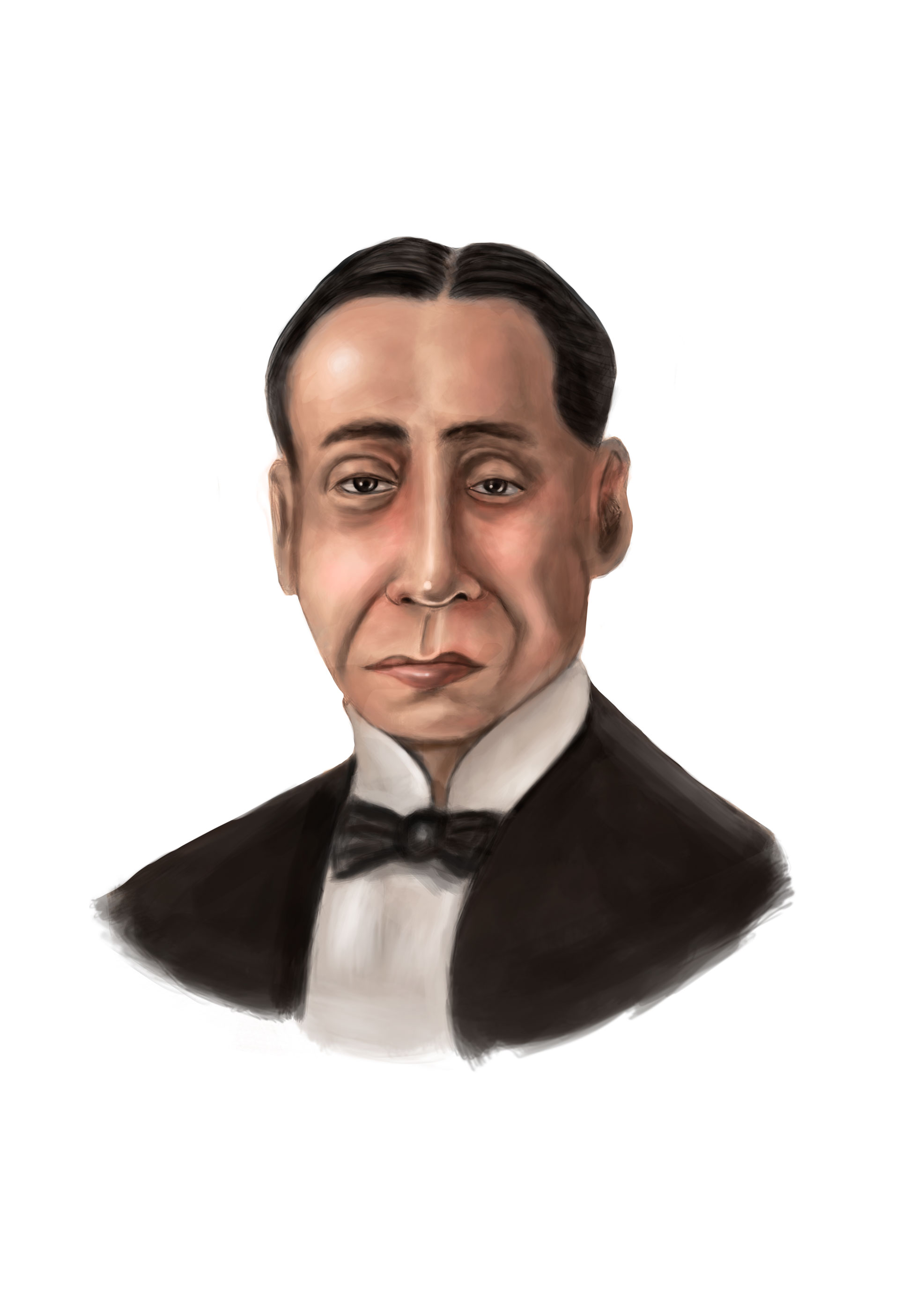
Artist’s impression of Seah Peck Seah. Commissioned and owned by author Shawn Seah.
Seah Peck Seah, the fourth son of Seah Eu Chin, was also an important pioneer. As he was the youngest son, he would have been born sometime around or after 1857. He passed away circa 1939.
My direct ancestor was a colourful character with a big personality.
For example, Seah Peck Seah actively participated in significant state or social events, such as the Diamond Jubilee Ball that celebrated sixty years of Queen Victoria’s reign in 1897, as well as birthday balls celebrating Her Majesty’s birthday. In 1905, he was also invited to a grand banquet held at the Istana Besar in Johore, in honour of the return of the Sultan from Europe.
Seah Peck Seah also loved fun, games, horseracing, and sports. He was often present at horse races as well as public athletic meetings, featuring sports like hurdle races, tug-of-war, and high jump.
(All of these colourful activities were publicly reported in Straits Budget (25 February 1896; 2 June 1898; 26 May 1900; 27 April 1905); Singapore Free Press and Mercantile Advertiser (26 May 1898; 9 October 1912); and many other sources.)
He liked to look good and dress well. According to “Some Reminiscences of Malaya” in The Straits Budget (24 July 1930), “Seah Peck Seah was one who drove a high gig or dog-cart, with a swift restive horse, and he usually [edited for clarity] dressed in bright blue or heliotrope silk Chinese trousers”.
Seah Peck Seah was married to Tan Soo Heok, who passed away in 1933. In September 1933, a Straits Times announcement stated that her funeral procession would take place on 7 September 1933 at 10am from 40 Orchard Road to the family burial ground at Ah Hood Road off Balestier Road.
Seah Peck Seah was the father of six sons: Seah Eng Lim, Eng Chiang, Eng Kiang, Eng Kwang, Eng Guan, and Eng Cer.
(As an aside, I learnt from a fellow heritage enthusiast that Seah Peck Seah’s son Eng Lim was a director of the Eastern United Assurance Corporation Limited and a managing director of the Sze Hai Tong Bank and Insurance Company. On 19 January 1911, Eng Lim married Tan Siow Kim (also spelt Tan Siew Kim), sister of Tan Joo Khoon, who was in Government service for 26 years, was well-known in the shipping community, and acted as Chinese interpreter. According to the Malaya Tribune (6 March 1935), Tan Siow Kim passed away in 1935.)
As for daughters, Seah Peck Seah had many daughters – at least eight of them. He often held huge and lavish weddings for his many daughters.
As reported in the Malaya Tribune on 12 December 1916:
There was a very large attendance at Mr. and Mrs. Seah Peck Seah’s house, 55 High-st. yesterday, in honour of the marriage of their eighth daughter, who was robed in her bridal costume. The family keeps up the old style of Chinese marriage custom. The bridal offerings and the handsome dress of the bride were a source of much admiration. Mr. W. E. Hooper proposed the health of the bride and her parents, the toast being very heartily drunk. A wayang was held in the courtyard, and the guests were right royally entertained.
According to The Straits Times, at High Street on the afternoon of 12 December 1909, the preliminary ceremony of the wedding of Seah Peck Seah’s seventh daughter was the occasion of a large and colourful gathering. And a colourful description in the newspaper duly followed:
Unfortunately a heavy shower of rain did not add to the comfort of those having to travel from the outlying districts. The bride was magnificently arrayed in her bridal costume, and surrounded by costly gifts. Madame Dietz’ Trio provided an elaborate musical performance while a wayang performed in the courtyard.
On 7 January 1909, the Singapore Free Press and Mercantile Advertiser (Weekly) reported in great detail on the preliminary wedding ceremony of Seah Peck Seah’s sixth daughter, Seah Wah Kim:
Miss Seah Wah Kim may have been pleased to find herself sitting in a gorgeous chair, wearing a gorgeous robe, and a decoration of diamonds and other precious stones that would make a newly-made American duchess green with envy. Probably she was, and is, pleased and proud. But it is even to be feared that the sight of so much magnificence showered upon her all in one lump (so to speak) at first dazzled her, and afterwards made her feel tired. Even a load of diamonds becomes heavy to the wearer.
It was the ordeal of Scrutiny that may have militated just a teeny weeny bit (or thereabouts) against a thorough enjoyment and realisation of the splendour and importance of her position.
WEDDING OF SIXTH DAUGHTER.
Miss Seah Wah Kim, who is the sixth daughter of Mr and Mrs Seah Peck Seah, of 55 High Street, is the future (the word “impending” is really more accurate) wife of Mr Tan Boon Yong, son of Mr Tan Swee Khee, of 42 High Street. She is also the grand-daughter of the late Mr and Mrs Seah Eu Chin. The “Seah” influence is a high one in Singapore social and commercial circles, and this was recognised and indicated in the nature of the celebrations that took place last evening at 55 High Street. This was on the occasion of the “preliminary” ceremony of the marriage, and the special event was the robing of the bride in one of her various important bridal costumes. As is well known numerous costumes have to be donned by the bride before the marriage ceremonial reaches its completion.
Mr and Mrs Seah Peck Seah have a large and convenient house at №55, which lends itself admirably to such festivities as were begun last evening. On this occasion the guests included the chief Europeans in Singapore, together with leading representatives of the Chinese community. They were received very cordially by Mr Seah Peck Seah and his relatives and friends, and treated with great hospitality. The house was prettily decorated; refreshments of a varied kind were provided; and a special attraction was there in the form of a wayang set up in the front garden or courtyard.
BRIDE IN REGAL STATE.
But, imprimis, there was the “audience” with the bride. Little Miss Seah Wah Kim, who is but eighteen, sat enthroned in a special apartment. May be it was her duty, according to Chinese custom, not to look buoyant and brilliante (though the glitter of the diamond rings, pendants, tiaras, coronets and what not may have more than made up for this): but those who paid her ladyship a visit no doubt knew all about these customs and ceremonies. Nobody likes being stared at for hours on end; cus-custom [sic] or no custom; and if Miss Seah Wah Kim refrained from being bright and chatty, it was not, on the whole, to be wondered at.
Speaking Chinese and Malay, she was able, however, to acknowledge the greetings and good wishes bestowed upon her by those who were able to speak these languages…
However, Seah Peck Seah did not just live a life of leisure, parties, and celebrations.
In the area of business leadership, Seah Peck Seah was involved in a wide range of businesses. He was a co-proprietor of the Chin Huat Hin Oil Trading Company (Seah Peck Seah & Co.), which sold a range of products, including “crude oil for spraying floors and drains”; “Michelin tyres”; “solar oil”; “liquid fuel”; and “Shell motor spirit”, according to public advertisements in the newspapers.
Seah Peck Seah also sat on the board of directors of the Sze Hai Tong Banking and Insurance Company, which was established in 1907 and located at 58 Kling Street, Singapore.
Seah Peck Seah was also the proprietor of the firm, Chop Chin Guan Heng, that was involved in the rubber and gutta-percha business in the Straits Settlements, Federated Malay States, the State of Johore, and other Unfederated Malay States.
He was also a landlord as well as a shareholder of the Straits Insurance Co. Ltd., according to my research.
In the area of community leadership, Seah Peck Seah was appointed a Justice of the Peace, just like his father. And as a prominent Straits Chinese, like his brother Seah Liang Seah, he served in the Straits Chinese British Association (SCBA). In fact, Seah Peck Seah was the first Honorary Treasurer of the Association, holding the position for four years. And in 1916, he was also a member of a committee to welcome the Chinese Amateur Theatrical Company of Penang to perform in Singapore in aid of the European Red Cross Fund.
He also strongly supported local education. According to Sir Song Ong Siang, in April 1899, the foundations for the Singapore Chinese Girls’ School were established; Seah Peck Seah, alongside Sir Song Ong Siang and Dr Lim Boon Keng, was on the committee.
In the final years of his long life, Seah Peck Seah suffered from ill health and his businesses faced challenges from the economic slump, such as the impact of the Great Depression.
Today, his life and contributions to society are still remembered in the name of Peck Seah Street.
*** ***
My Great-Grandfather’s Crazy Rich Asian Wedding

Collage consisting of an artist’s impression of Seah Eng Kwang and a scanned photograph of his wife, Cecilia Tan Hong Jee. Artwork commissioned and owned by author Shawn Seah; photograph from the Seah family archive.
My great-grandfather, Seah Eng Kwang (b. unknown; d. 1952), was Seah Peck Seah’s fourth son. His wife, Cecilia Tan Hong Jee (1902–1998), was my great-grandmother.
On 20 October 1915, The Straits Times reported:
The doors of Mr. and Mrs. Seah Peck Seah’s residence in High Street were thrown widely open yesterday in honour of the marriage of Mr. Seah Eng Kwang, the fourth son of these hospitable hosts, who have held numerous receptions there during the past few years.
The bride, Miss Tan Hong Jee, a daughter of Mr. Tan Chew Kian, merchant of Rhio, was arrayed in a typical Chinese wedding raiment and, in accordance with custom, sat in the bridal chamber with the bridegroom where they were visited by the guests.
Unfortunately, the weather was awful and many friends were at the races, but the guests arrived in large numbers and much enjoyed the function, everything being done to ensure their comfort.
The rooms were hung with rich Chinese tapestries, while other characteristic decorations adorned the stairways and entrance hall, the inevitable wayang being in the courtyard and affording much enjoyment to the Chinese guests who tendered congratulations the day previous and again last evening.
In proposing the health of the bride and bridegroom, the Hon R J. Wilkinson, C.M.G., said it might interest those present to know that the family of Seah Peck Seah was a thorough Singapore family because most of the Chinese families known in the Straits Settlements came from Malacca or Penang.
Mr. Seah Peck Seah’s father was the first settler to come from China to Singapore [author’s note: this is apocryphal], he believed, and was one of the first Justices of the Peace in the Settlement. Mr. Seah Eng Kwang, the bridegroom, was a son of Mr. Seah Peck Seah, whose elder brother, Mr. Seah Liang Seah, was for many years a member of the Legislative Council of the Colony.
He wished both the bride and bridegroom long life, happiness and prosperity. The toast having been drunk, the Hon. Dr. Lim Boon Keng, on behalf of Mr. Seah Peck Seah, thanked the guests for attending the function, and said that he very greatly appreciated the kindness shewn [sic] by them in coming on such a wet afternoon and in spite of the fact that the race meeting was being held.
Captured in an old Straits Times article more than a century ago is a description from a time long gone that will never return again.
*** ***
Notes, Acknowledgements, and Disclaimers
Names in this section have been standardised for consistency, e.g. “Cho Sia” is spelt “Seah Cheo Seah”; “Pek Seah” is spelt “Peck Seah”.
To illustrate the wide range of possible spellings, and why standardisation has been necessary, consider these alternative ways to spell Seah Cheo Seah:
(i) Seah Cheoh Seah;
(ii) Seah Choak Seah;
(iii) Seah Cho Sia;
(iv) Seah Cho Seah; or
(v) Seah Choo Seah.
All of these variants refer to the same person, Seah Cheo Seah (1846 – 1885), the eldest son of Seah Eu Chin.
The copyright for all the images, artwork, and photographs belongs to author and public speaker Shawn Seah, unless indicated otherwise, e.g. some are courtesy of Kenneth Seah.
Special thanks to those who provided input, including Patrick, Gerardine, Walter, Irene, Angeline, and Chyen Yee.
*** ***
Copyright © 2017 by Shawn Seah
Webpage updated: 18 July 2025
All rights reserved
 Seah Eu Chin