Street names are not just about indicating a specific location.
Some names reflect our history and heritage, while others carry our hopes and dreams.
There are several streets in Singapore named after members of the Seah family, such as Eu Chin Street, Liang Seah Street, and Peck Seah Street.
Naming streets after the pioneers who contributed to Singapore is a good way to remember and honour them.
Eu Chin Street

Eu Chin Street sign, at Tiong Bahru. Tiong Bahru Community Centre is located at 67A Eu Chin Street, Singapore 169715. Photograph by author Shawn Seah.
Eu Chin Street is named after Seah Eu Chin.
(For more information on Seah Eu Chin, please click here: Seah Eu Chin’s life and times.)
Eu Chin Street is located in Tiong Bahru, Singapore’s first public housing estate. The estate was developed in the 1920s and 1930s by the Singapore Improvement Trust (SIT), the predecessor of the Housing and Development Board (HDB).
According to S. Ramachandra in the Sunday Standard (2 October 1955), Tiong Bahru’s roads were laid out and named after various prominent Chinese, including Seah Eu Chin, in 1931.
Another interesting fact is that Tiong Bahru Community Centre at Eu Chin Street was Singapore’s first Community Centre, bringing the community together and strengthening social cohesion. Officially opened in July 1951, it was originally an air-raid shelter!
The photograph below, taken by C. Seah, shows both Eu Chin Street and Tiong Bahru Community Centre, as well as colourful decorations for Singapore’s 52nd National Day celebrations in 2017.

Eu Chin Street and Tiong Bahru Community Centre. Photograph by C. Seah.
Eu Chin Street is perpendicular to Seng Poh Road, and close to Seng Poh Garden.
There is a sculpture called the Dancing Girl at Seng Poh Garden. From certain angles, the girl looks like a graceful swan, poised to take flight and soar.
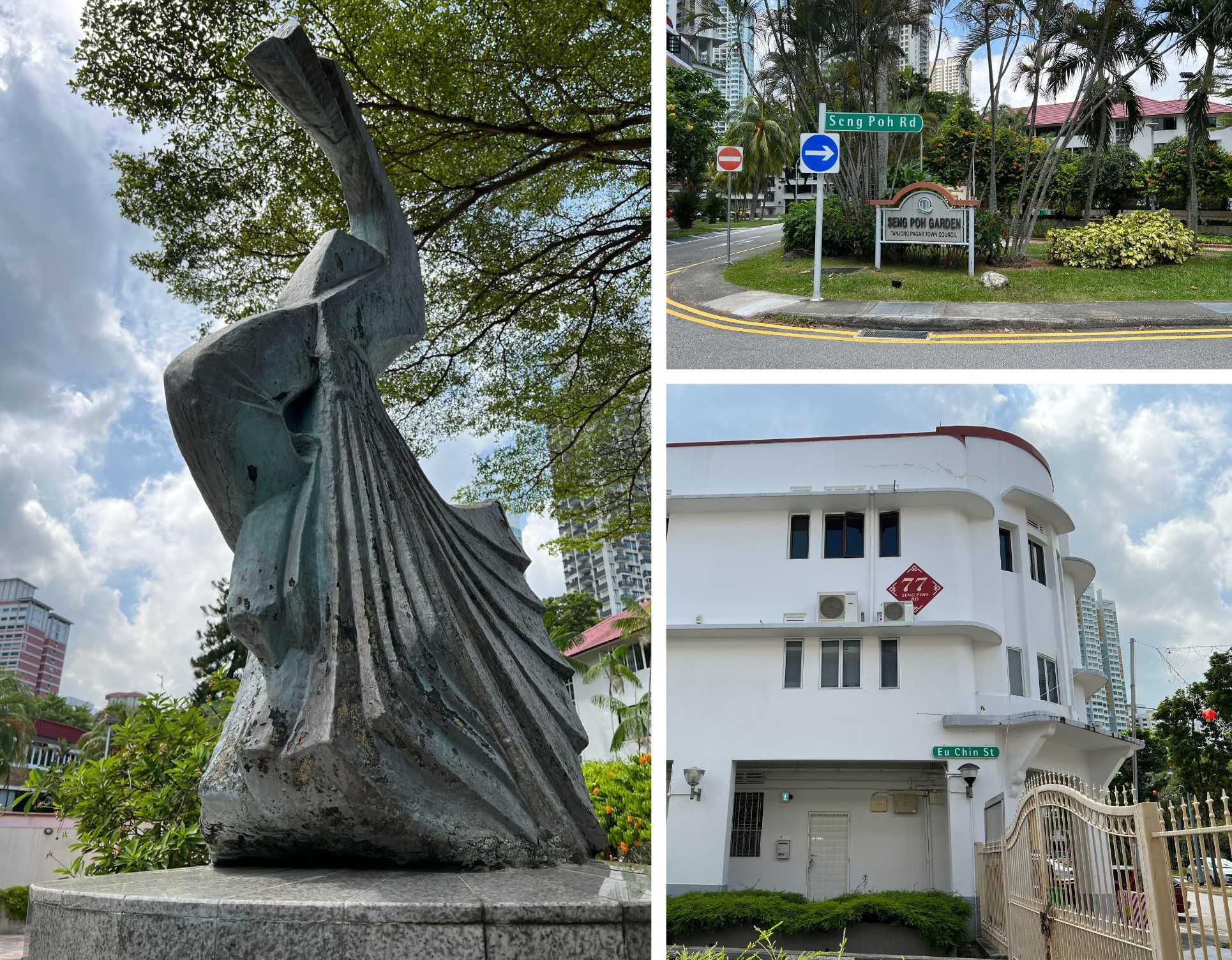
Photo collage of (clockwise) the Dancing Girl sculpture at Seng Poh Garden; Seng Poh Road and Seng Poh Garden; and Eu Chin Street. Photographs in this collage taken by author Shawn Seah.
Seng Poh Road and Seng Poh Lane
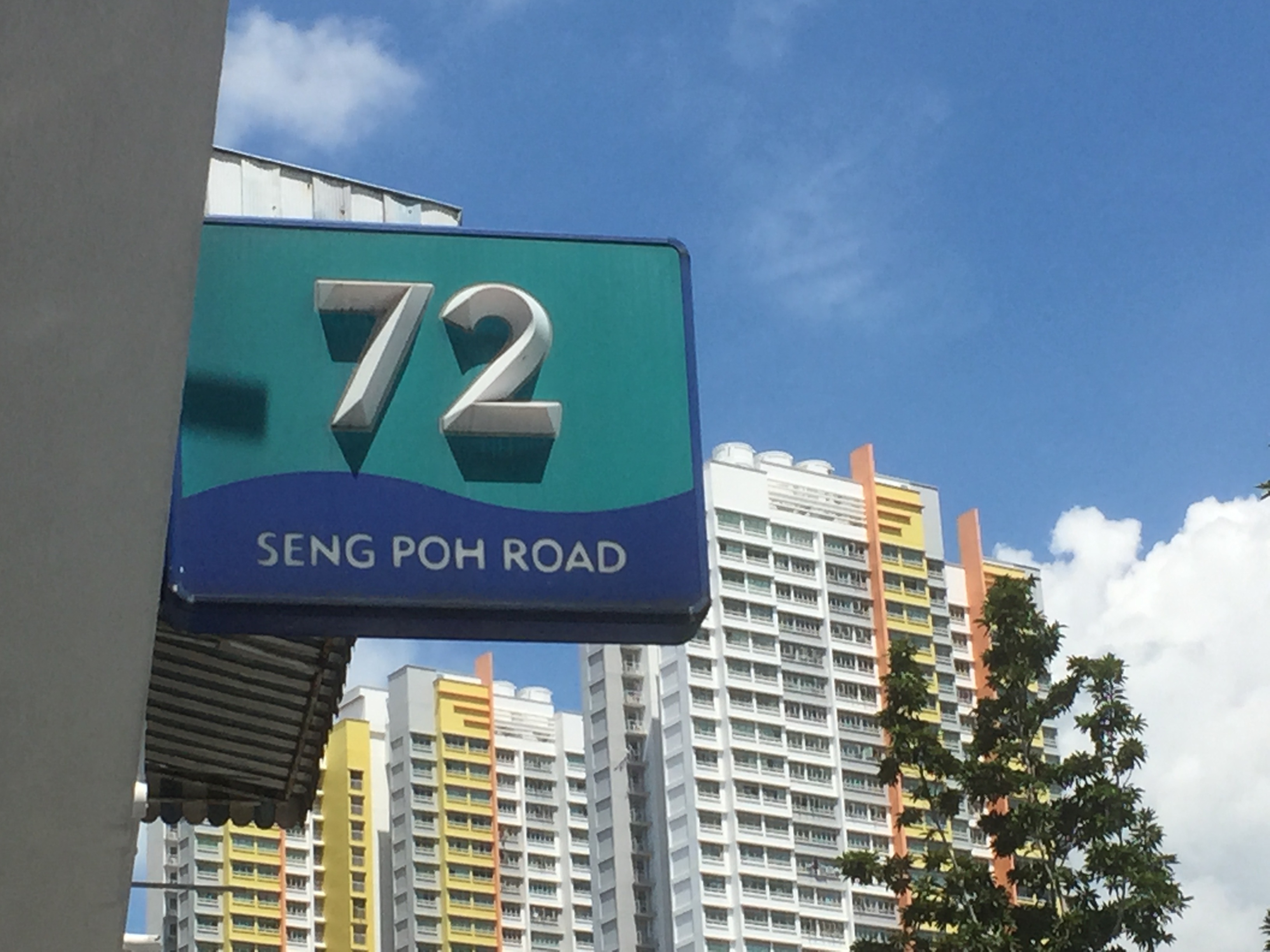
Seng Poh Road at Tiong Bahru. Photograph by author Shawn Seah.
In fact, both Seng Poh Road and Seng Poh Lane are named after Tan Seng Poh, Seah Eu Chin’s famous brother-in-law, one of the most significant pioneers in Singapore’s early history. It is significant that a road and a lane are named after him, and that they are near Eu Chin Street.
What is the story of the man behind the street names: who was Tan Seng Poh?
The son of the Kapitan Cina of Perak in Malaya, Tan Seng Poh came to Singapore when he was nine years old to accompany his sister.
He studied in Singapore and later worked for his brother-in-law Seah Eu Chin, rising from an assistant to the post of manager.
While Seng Poh successfully bought and sold commodities such as cotton and tea, he also traded harmful vices, such as opium, which were legal under British colonial rule.
However, Seng Poh later gave back to society. He raised money for charitable causes; worked on improving Singapore for almost a decade; and maintained peace and order.
After a lifetime of achievements and service, Tan Seng Poh passed away in 1879.
Liang Seah Street
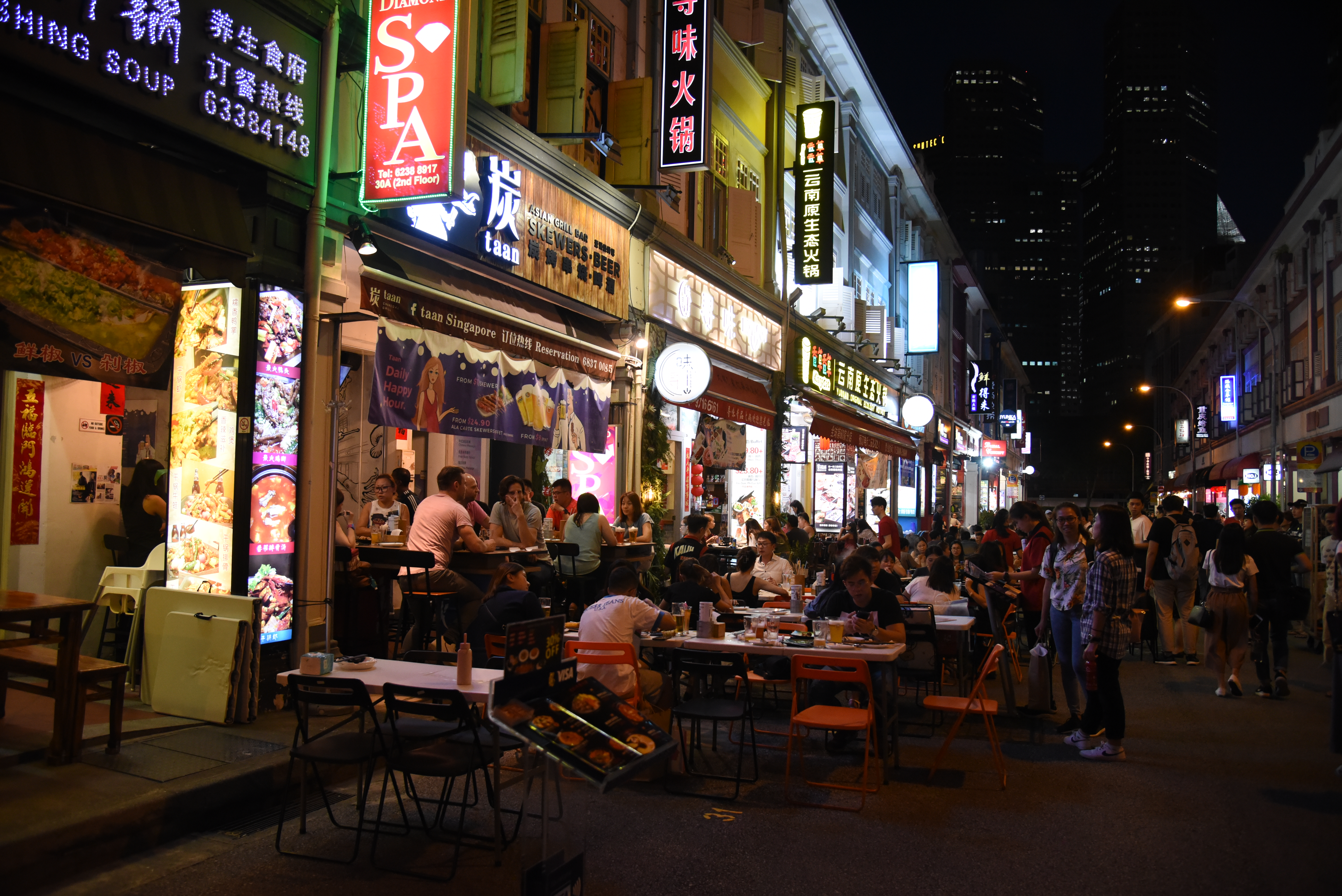
Liang Seah Street at night, full of life and buzz. Photograph by author Shawn Seah.
Eu Chin Street is not the only street in Singapore named after a member of the Seah family.
Seah Eu Chin’s famous second son, Seah Liang Seah, also had a street named after him in 1927: Liang Seah Street. It is located at Bugis area, between North Bridge Road and Beach Road.
(For more information on Seah Liang Seah, please click here: Seah Liang Seah.)
Beach Road, as the name suggests, was a seafront in the 1800s. Later, land was reclaimed over several phases, from the 1900s.
As you can see from the photograph above, Liang Seah Street is full of buzz at night (photograph was taken in 2019).
Peck Seah Street
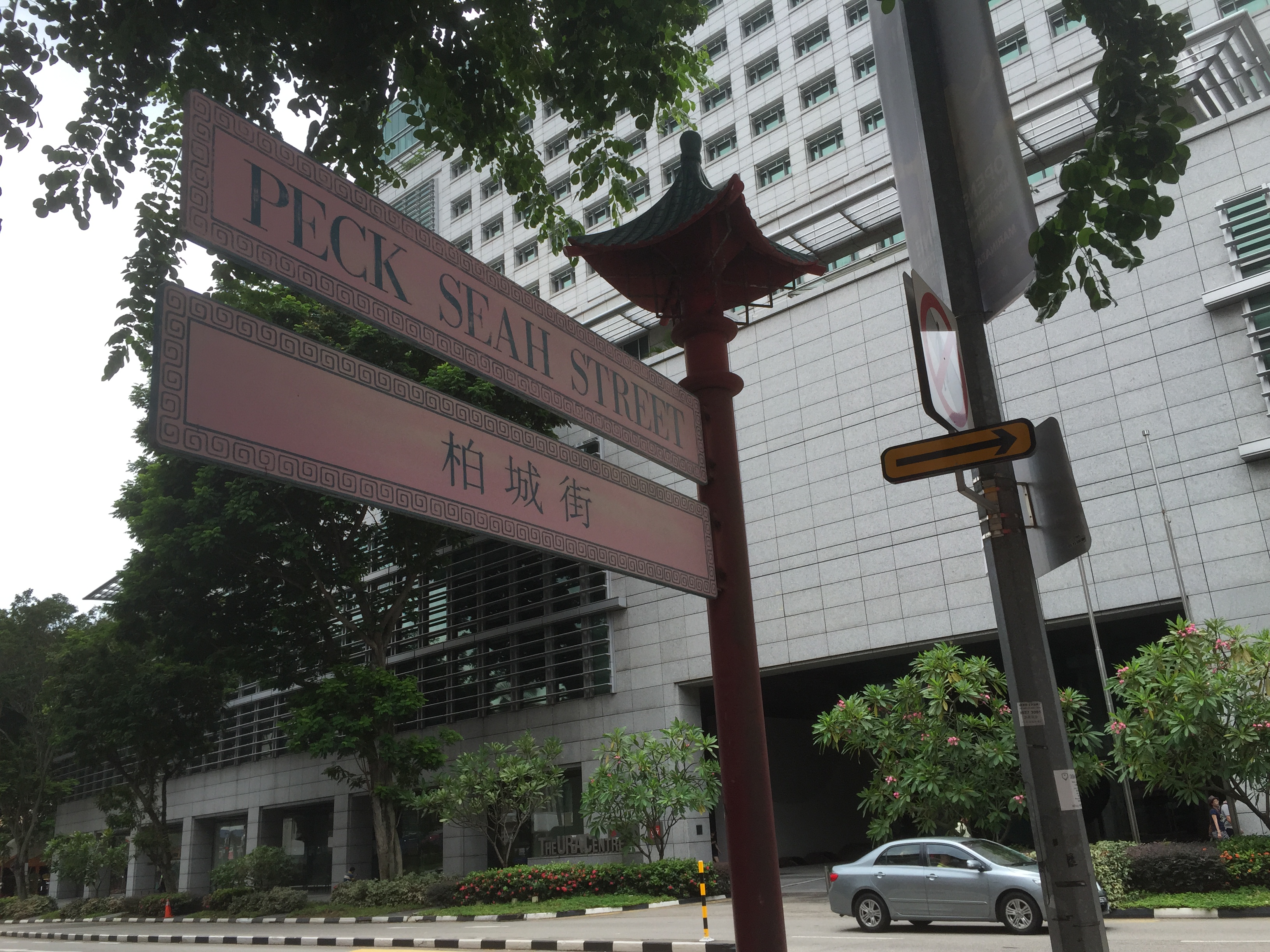
Peck Seah Street sign. Photograph by author Shawn Seah.
Seah Liang Seah’s youngest brother, Seah Peck Seah, also made a name for himself.
Peck Seah Street is located in Tanjong Pagar, just off Maxwell Road, and stands testimony to Seah Peck Seah’s many contributions to Singapore.
(To learn more, please visit the section devoted to Seah Peck Seah at this link: Seah Eu Chin’s family.)
Seah Street

Seah Street sign at the Bras Basah area, next to Raffles Hotel. Photograph by author Shawn Seah.
Other than Eu Chin Street, Liang Seah Street, and Peck Seah Street, there is one more road that deserves special mention: Seah Street, a street of about 200 metres long, around the Bras Basah area, between North Bridge Road and Beach Road.
Today, the Mint Museum of Toys and the Raffles Hotel arcade are along the street, along with many shops and eateries.
Seah Street is named after the Seah family in recognition of the family’s many significant contributions to Singapore in its early days.
Purvis Street: Originally Named Song Seah Road
It is a little known fact that Purvis Street was originally named Song Seah Road, after Seah Eu Chin’s third son.
A story goes that, while the Purvis Street area was under development, it was Song Seah’s private land and therefore named after him in the planning submission.
Upon completion, after the properties were sold and no longer privately-held by Song Seah, the authorities renamed the street.
(To learn more, please visit the section devoted to Seah Song Seah in Seah Eu Chin’s family.)
A Brief History of Middle Road, Purvis Street, and Seah Street
The Hainanese came to Singapore much later compared to the other Chinese dialect groups, such as the Hokkien and Teochew.
When the Hainanese arrived in Singapore, they found that the Hokkien and Teochew were already entrenched in agriculture, commerce, and trade networks. Small in numbers, the Hainanese did not have extensive networks and relationships in Singapore that the larger groups possessed.
Middle Road, Purvis Street, and Seah Street used to be a settlement site for Hainanese migrants. As such, they were commonly referred to as Hainan First Street, Hainan Second Street, and Hainan Third Street respectively.
The Hainanese who lived in the area opened coffee shops, provision shops, and even postal services. They worked in many domestic or service roles. Many were servants, chefs, and bartenders for the British.
For example, Hainanese Ngiam Tong Boon, a bartender at Raffles Hotel, was widely-regarded as the first creator of the cocktail called the Singapore Sling, around 1915.
At the time, societal norms dictated that ladies were not allowed to drink alcohol in public, but punch was acceptable. As Ngiam Tong Boon had created a pink drink that looked like punch, no one knew that ladies were actually drinking alcohol.
Clever marketing or historical fact?
Local history can provide a good conversation starter by sparking discussions.
But beyond just starting conversations (which is important), learning and re-learning the stories of the people behind the street names can help us feel connected to places, people, and times gone past.
By doing so, we are able to better understand our past, where we come from, and who we are as a people.
Who Named Singapore’s Streets? A Brief Historical Overview
Soon after the British arrived in Singapore in the 19th century, they started building streets and naming them.
For example, according to the Urban Redevelopment Authority’s (URA) Singapore Street, Building and Place Names: Past, Present and Future (2020), High Street was one of the earliest streets built in Singapore in 1819, cleared from the jungle near the shore for the treaty signing with the Temenggong. As this street was on higher ground compared to its surroundings, it was named High Street. This “matter-of-fact approach” was one of the oldest methods of street naming in Singapore.
Town Planning
In 1822, Sir Stamford Raffles started a town plan to guide land allocation to ensure the orderly growth of the town. This was eventually known as the Raffles Town Plan or the Jackson Plan (because it was drawn up by Lieutenant Philip Jackson according to Raffles’ vision).
Among its key features were a road network in a grid layout and segregation of residential areas by ethnic group. In Raffles’ brief to the Town Planning Committee in 1822, he specified that each street should receive an appropriate name that reflected the different Asian communities assigned to each quarter to prevent confusion and disputes.
Street Naming Came Under the Municipal Commission During Colonial Times
From the 1880s, street naming in Singapore came under the responsibility of the Municipal Commission, with names approved by the Municipal Council. During this period, streets were commonly named after prominent people, typically to appreciate their contributions to society.
Informally, locals had a different system to signify the landscape and called places by other names that made more sense to them. For example, the Chinese literally referred to Singapore’s Chinatown as “bullock cart water” (牛车水). At the time, water was often brought to town on bullock carts.
The Advisory Committee on the Naming of Roads and Streets
After independence, responsibility shifted to the Advisory Committee on the Naming of Roads and Streets, formed in 1967 under the Ministry of Finance.
Aiming to foster a sense of national identity, this committee guided naming policies through the 1970s, promoting names that reflected Singapore’s multicultural identity.
For a while after independence, Malay place names were recommended, often starting with “Jalan” and “Lorong” (which translates to “streets” and “alleys” respectively). In 1968, a committee was set up to standardise street names in Chinese and provide English translations for Chinese and dialect place names.
(The committee’s name also changed several times. It was changed from the “Advisory Committee on the Naming of Roads and Streets” to the “Street and Building Names Advisory Committee”, then “Committee on Street Names”, then to “Advisory Committee on Street Names”.)
The Street and Building Names Board (SBNB)
In 2003, the Street and Building Names Board (SBNB) was established under the Property Tax Act and replaced the advisory committee. The SBNB ensures that street and building names are appropriate, clear, and culturally meaningful.
According to the Handbook on Guidelines for Naming of Streets (first ed. 2017), the SBNB considers and approves the naming and renaming of buildings, estates, and streets proposed by building owners and developers.
The Inland Revenue Authority of Singapore (IRAS) will then assign property addresses based on the approved street and building names.
Since 30 April 2010, the URA took over the secretariat function for the SBNB from IRAS, managing applications and coordinating with agencies such as the Land Transport Authority (LTA). While proposals may come from developers, property owners, or government agencies, final approval lies with the SBNB, maintaining a structured and consistent approach to naming across Singapore.
*** ***
Copyright © 2017 by Shawn Seah
Webpage updated: 27 July 2025
All rights reserved
 Seah Eu Chin